The Views Were Protected. Until They Weren’t.
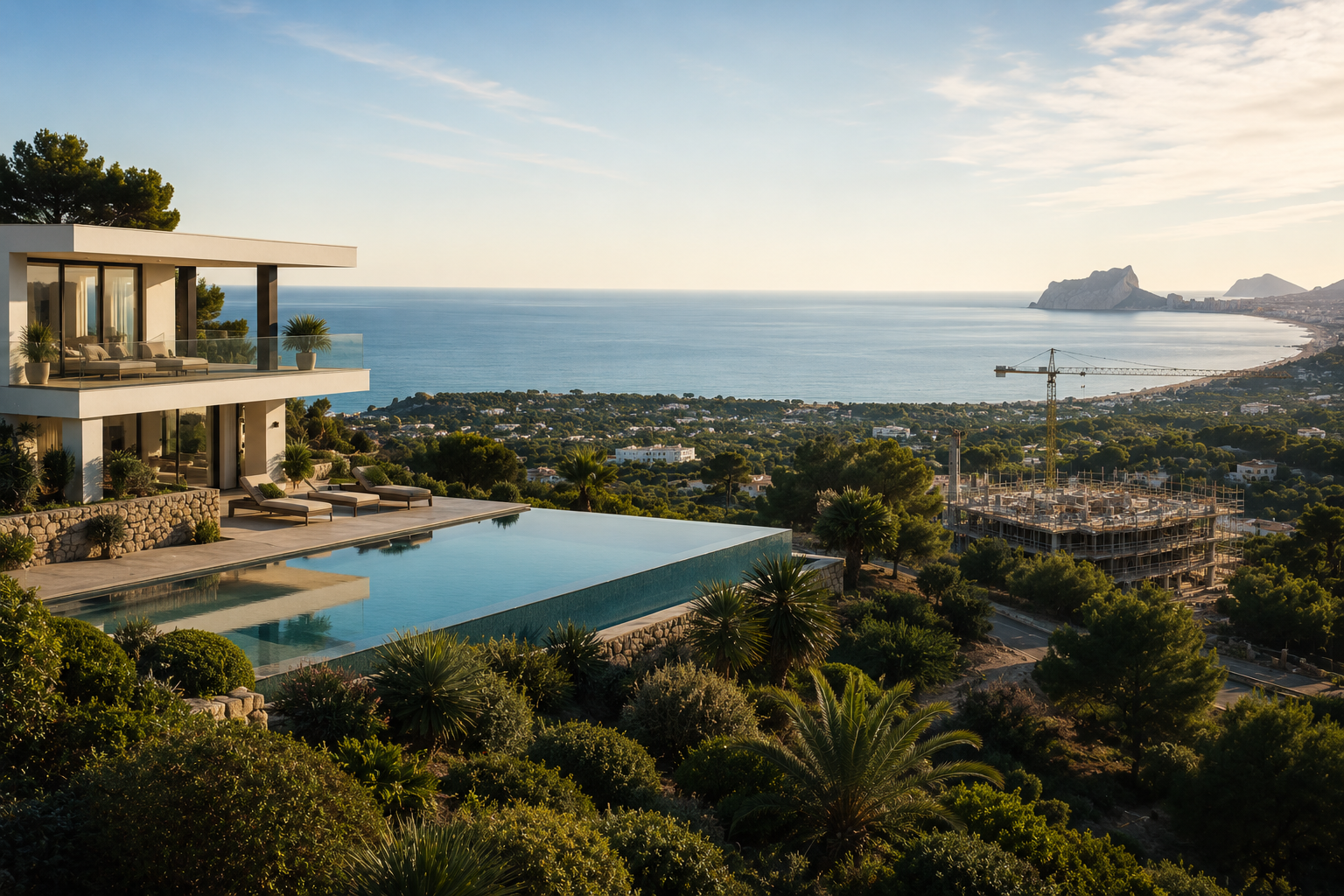
A buyer contacted Terraveris Group regarding the acquisition of a high-end property in coastal Spain primarily valued for its panoramic sea views, privacy, and surrounding natural environment.
The property itself appeared highly attractive:
elevated position,
unobstructed views,
low-density surroundings,
modern Mediterranean architecture,
and strong long-term investment appeal.
The listing repeatedly emphasized:
“protected views,”
“guaranteed privacy,”
and the tranquility of the surrounding area.
At first glance, the acquisition appeared straightforward.
However, deeper due diligence revealed a very different risk profile.
The Assumption Many Buyers Make
One of the most common assumptions in premium real estate is this:
If a property has open views today, those views will remain protected in the future.
In practice, this is often incorrect.
A neighboring parcel may:
appear undeveloped,
feel protected,
contain vegetation or natural landscape,
and still carry future development rights capable of materially changing the surrounding environment.
This becomes particularly important in:
coastal areas,
hillside developments,
expanding municipalities,
and luxury residential zones across Spain.
What the Review Revealed
During the review process, analysis extended beyond the property itself and into the broader planning context surrounding the asset.
Several important findings emerged.
1. Neighboring Parcels Carried Development Potential
Planning analysis identified nearby parcels that, despite appearing undeveloped, carried urban or partially developable classifications.
From a visual perspective, the area appeared permanently protected.
From a planning perspective, future development remained possible.
This distinction significantly altered the long-term risk profile associated with the acquisition.
2. Future Construction Could Materially Affect the Property
Further review indicated that future development on surrounding land could potentially impact:
sea views,
visual privacy,
natural sightlines,
sunlight exposure,
and the overall perception of exclusivity surrounding the property.
For buyers paying a premium specifically tied to views and environmental quality, this type of exposure can materially affect long-term value preservation.
3. Marketing Language Did Not Reflect Planning Reality
The property was marketed using terms such as:
“protected surroundings,”
“unobstructed views,”
and “permanent privacy.”
However, no evidence suggested that surrounding parcels were permanently restricted from future development.
This is a critical distinction.
In Spain, descriptive marketing language does not automatically reflect legally protected planning conditions.
Why Buyers Frequently Miss This Risk
Most buyers naturally focus on:
the property itself,
interior quality,
finishes,
current surroundings,
and visible neighboring conditions.
However, future development risk often exists outside the boundaries of the property being purchased.
This means the real exposure may not be:
the house,
the construction quality,
or the ownership structure,
but rather the evolution of the surrounding environment over time.
For international buyers unfamiliar with Spanish planning systems, this layer of risk is frequently underestimated.
Why This Matters Financially
Premium properties derive substantial value from:
views,
privacy,
environmental quality,
and surrounding character.
If those attributes change materially in the future, the consequences may include:
reduced resale attractiveness,
weaker long-term value preservation,
diminished exclusivity,
lower buyer demand,
or altered investment positioning.
In luxury markets, neighboring development risk can materially affect the long-term economics of an acquisition.
What Proper Due Diligence Should Verify
A comprehensive acquisition review should not focus exclusively on the property itself.
It should also analyze:
neighboring parcel classifications,
urban planning context,
future development potential,
zoning evolution,
environmental limitations,
and surrounding land-use conditions.
This becomes particularly important for:
luxury villas,
sea-view properties,
hillside homes,
investment-driven acquisitions,
and privacy-oriented purchases.
The Key Reality
A property offering unobstructed views today does not automatically guarantee those views will remain protected tomorrow.
Some of the most important risks in premium real estate are not attached directly to the property itself — but to the future evolution of the surrounding area.
Understanding those risks before acquisition can significantly improve long-term investment protection and decision-making.
Terraveris Group provides independent property due diligence and risk analysis for buyers, investors, and developers evaluating real estate opportunities throughout Spain.