The Property Was Marketed as “Move-In Ready.” The Urban Situation Was Far Less Clear.
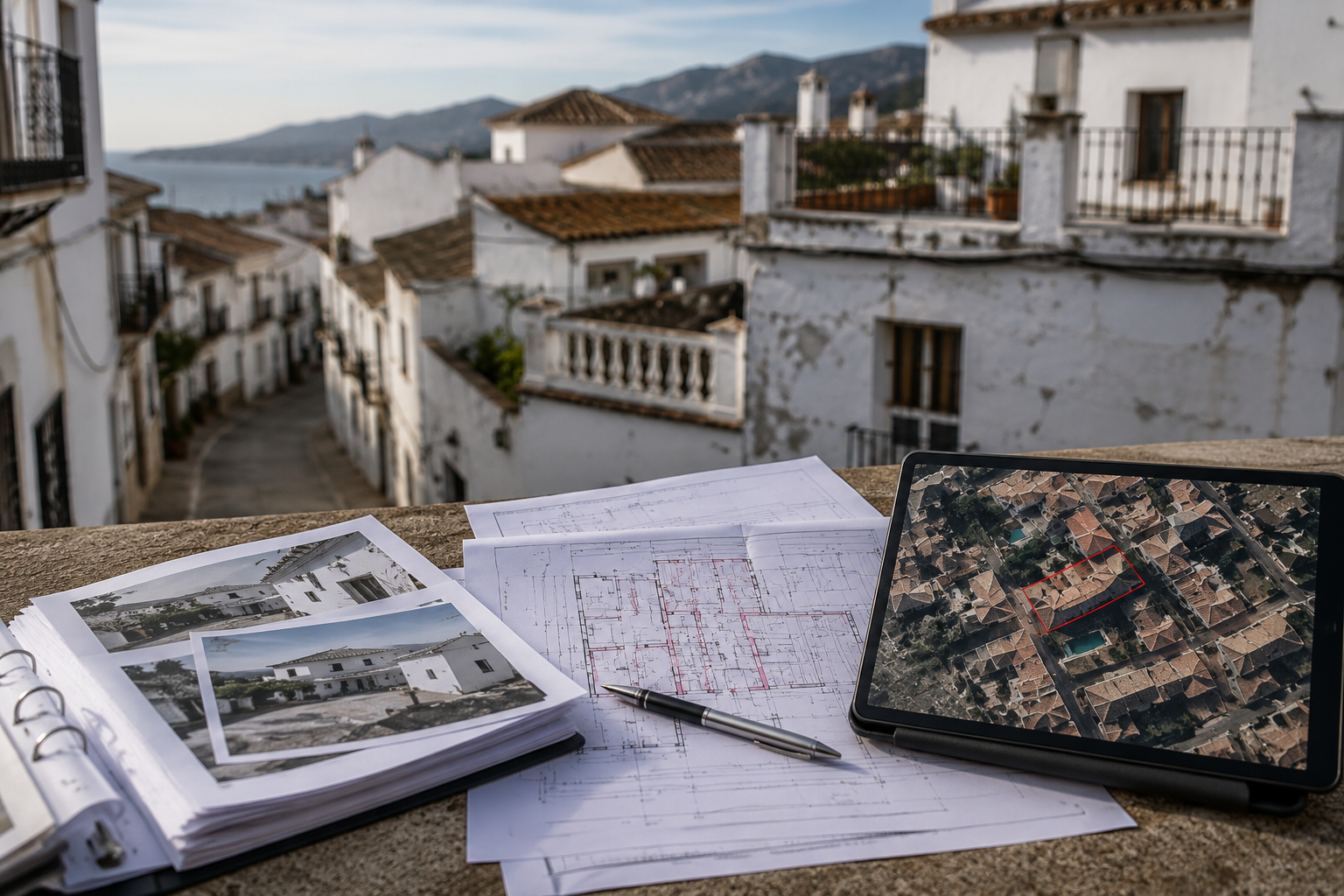
A buyer contacted Terraveris Group regarding the acquisition of a renovated property in Spain being marketed as turnkey and fully prepared for immediate use.
The property itself appeared highly attractive. The finishes were modern, the presentation was professional, and the house had clearly undergone substantial investment over time.
At first glance, the acquisition seemed straightforward.
However, during the due diligence process, analysis extended beyond the visible condition of the property and into the broader urban and administrative framework surrounding the asset.
That is where important inconsistencies began to emerge.
The Assumption Many Buyers Make
One of the most common assumptions in Spanish real estate is that if a property is actively marketed, renovated, and occupied, its urban and administrative situation must already be fully regularized.
In practice, this is often incorrect.
Many properties evolve over long periods of time through phased renovations, modifications, redistributions, or historical alterations that may not always align perfectly with the current administrative reality of the asset.
As a result, a property can appear fully functional and visually coherent while still carrying unresolved urban or technical complexities beneath the surface.
What the Review Revealed
During the review process, registry information, cadastral data, municipal documentation, historical references, and physical observations were compared to better understand the broader legal and urban profile of the property.
As the analysis progressed, inconsistencies emerged regarding how certain parts of the property appeared to have evolved over time and whether all elements fully aligned with the current administrative framework surrounding the asset.
The issue was not necessarily that the property could not be used or enjoyed.
The deeper concern involved understanding the level of regularization, documentation consistency, and long-term clarity attached to the investment.
Why Buyers Frequently Miss This Risk
Most buyers naturally focus on visible quality.
If a property appears modern, renovated, and professionally presented, it is easy to assume the underlying administrative structure is equally straightforward.
However, some of the most important risks in Spanish real estate are not visible during a viewing.
They often emerge only when multiple independent sources of information are compared carefully over time.
For international buyers unfamiliar with Spain’s fragmented administrative systems, this layer of complexity is frequently underestimated.
Why This Matters Financially
Urban and administrative inconsistencies can materially affect financing confidence, future resale processes, renovation permissions, investment predictability, and long-term ownership flexibility.
In some cases, the issue is not whether the property is attractive today.
The issue is whether the buyer fully understands the broader administrative and urban complexity attached to the asset before acquisition.
What Proper Due Diligence Should Verify
A comprehensive acquisition review should not focus exclusively on visible presentation or renovation quality.
It should also evaluate how the property aligns across registry information, cadastral records, municipal references, historical evolution, and the broader urban framework surrounding the asset.
This becomes particularly important in renovated villas, older Mediterranean homes, inherited properties, and assets that have undergone multiple renovation phases over long ownership periods.
The Key Reality
A visually impressive property does not automatically guarantee a simple or fully coherent administrative structure behind it.
Some of the most important risks in Spanish real estate are hidden beneath the surface of otherwise attractive investments.
Understanding those risks before acquisition can significantly improve long-term investment clarity and decision-making.
Terraveris Group provides independent property due diligence and risk analysis for buyers, investors, and developers evaluating real estate opportunities throughout Spain.