The Land Looked Rural. The Restrictions Were Much Bigger.
A buyer contacted Terraveris Group after finding what initially appeared to be the perfect opportunity to build a private countryside villa in Spain.
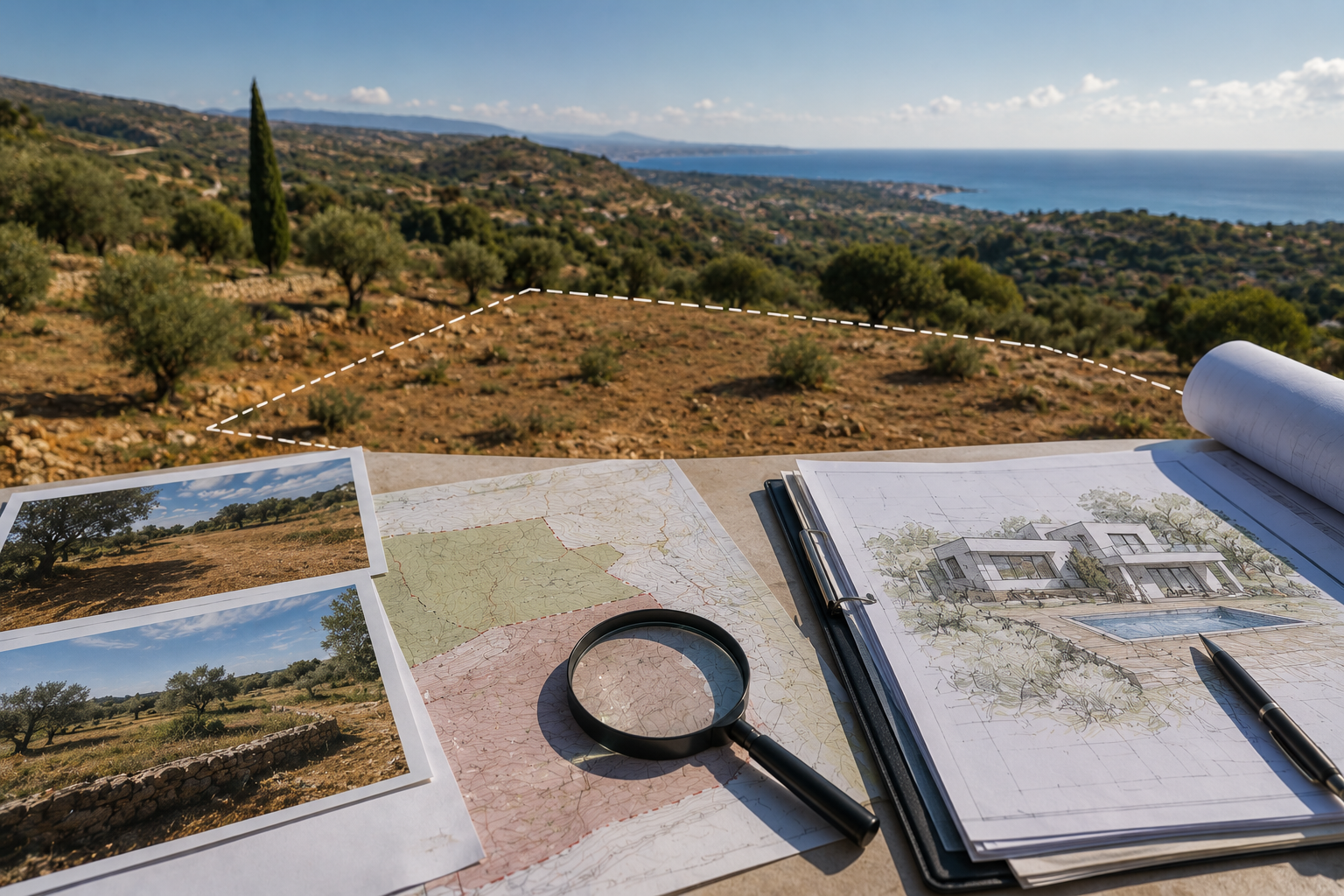
The property was marketed as peaceful, secluded, surrounded by nature, and ideal for a luxury residential project. According to the seller, the land was described as fully developable, and the buyer had already begun discussing concepts with architects and estimating construction costs.
At first glance, the project appeared straightforward.
However, during the due diligence process, the analysis extended beyond the marketing presentation and into the detailed planning framework governing the land.
That is where the situation became significantly more complex.
The Assumption Many Buyers Make
Many international buyers assume that if rural land is actively marketed for residential development, then the viability of construction has already been verified.
In Spain, this assumption can become extremely dangerous.
Rural land classifications often contain multiple layers of environmental, agricultural, landscape, infrastructure, or urban planning restrictions that are not immediately obvious in listings or casual conversations.
In many cases, sellers themselves may not fully understand the practical limitations affecting the land.
What The Investigation Revealed
During the review process, historical planning documents, municipal references, and land classifications were analyzed to better understand the parcel’s actual development potential.
As the investigation progressed, important limitations began to emerge regarding what could realistically be built on the land and under which conditions future approvals might be granted.
Further analysis raised concerns regarding buildability constraints, infrastructure access, protected land considerations, and the broader feasibility of the buyer’s intended project.
The most important finding was not necessarily that the land was unbuildable.
The deeper issue was that the buyer’s expectations and the land’s actual planning reality were far less aligned than initially presented.
Why Buyers Frequently Miss This Risk
Many buyers naturally focus on the visual appeal of the land itself.
If a parcel appears attractive, private, and suitable for development, it is easy to assume the planning situation must also be straightforward.
However, some of the most important risks in land acquisitions are hidden within planning interpretation, municipal restrictions, environmental limitations, and infrastructure realities that may not become obvious until much later in the investment process.
For international buyers unfamiliar with Spanish planning systems, this layer of complexity is frequently underestimated.
Why This Matters Financially
One of the biggest risks in Spanish real estate is confusing ownership rights with development rights.
Buying land does not automatically guarantee the ability to build the project a buyer imagines.
And once land has already been purchased, reversing that misunderstanding can become financially devastating.
Many buyers only discover these restrictions after hiring architects, investing in project design, or already committing substantial capital to the acquisition.
The Value Of Independent Due Diligence
This case was not necessarily about fraud or fake documentation.
It was about interpretation.
The difference between how land is marketed and what planning reality may actually allow in practice.
Because in real estate, some of the biggest financial mistakes happen long before construction begins.
They happen when buyers assume that “possible” and “permitted” mean the same thing.
Terraveris Group provides independent property due diligence and risk analysis for buyers, investors, and developers evaluating real estate opportunities throughout Spain.
Our work helps clients identify hidden risks, planning limitations, documentation inconsistencies, and regulatory concerns before major financial decisions are made.